
Blog / Website Development
DPDP Act 2023: Is Your Website Ready for India's New Data Protection Rules?
By CWP Digital · 9 Nov 2026
India's Digital Personal Data Protection (DPDP) Act, 2023, and the DPDP Rules, 2025 are changing how businesses collect, process, store and protect customer data. If your website has contact forms, enquiry forms, cookies, tracking pixels or online payment facilities, now is the time to review your data protection practices.In today's digital world, almost every business website collects some form of customer information. Whether a visitor fills out a contact form, requests a quotation, subscribes to a newsletter or makes an online purchase, their personal data may be processed by your business.However, many business owners are unaware of their responsibilities regarding customer data.With the introduction of the Digital Personal Data Protection (DPDP) Act, 2023, and the notification of the DPDP Rules, 2025, India has established a comprehensive framework for digital personal data protection.The major compliance provisions are scheduled to come into force in May 2027, following a phased implementation timeline. Businesses should use this preparation period to review their websites, marketing systems and data management practices.
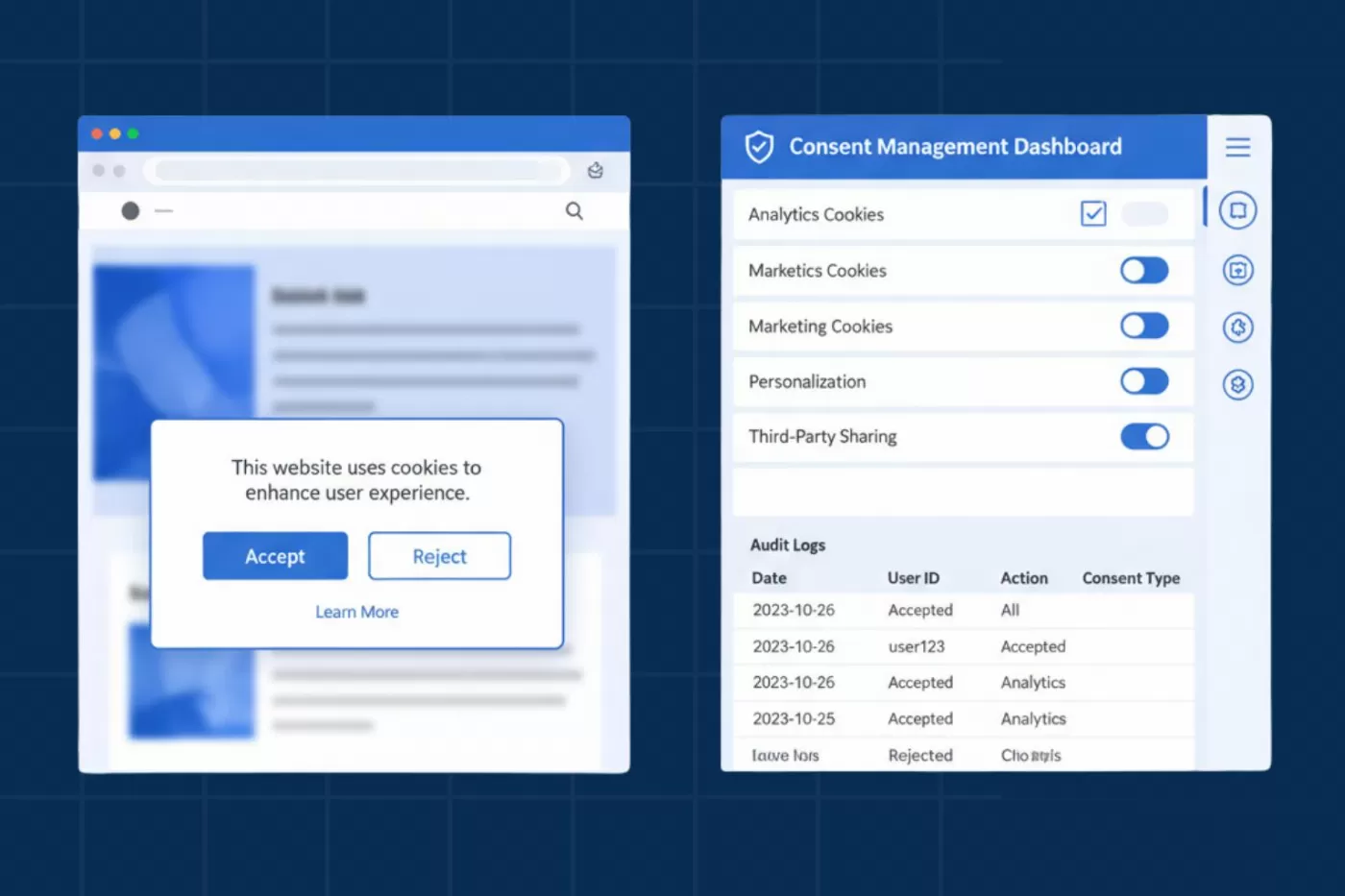
At CWP Digital, we believe that a secure and compliant website is an essential part of building customer trust and a sustainable online business.
Let's understand what the DPDP Act means for your website and what you should do to prepare.
The Digital Personal Data Protection Act, 2023, is an Indian law designed to regulate the processing of digital personal data and protect individuals' privacy.
It establishes responsibilities for organisations that determine why and how personal data is processed. These organisations are generally known as Data Fiduciaries.
The law also provides individuals, known as Data Principals, with rights concerning their personal information.
The DPDP Rules, 2025, notified in November 2025, provide the operational framework for implementing the Act.
The framework focuses on important principles such as:
- Transparency in data collection and processing.
- Consent and lawful processing.
- Collection of only necessary personal data.
- Accuracy of personal information.
- Limiting data retention.
- Reasonable security safeguards.
- Accountability for data protection.
When Will the DPDP Act Become Fully Applicable?
The government has introduced a phased implementation timeline.
Important milestoneDateDPDP Act received Presidential assent11 August 2023DPDP Rules, 2025 notifiedNovember 2025Consent Manager-related provisionsNovember 2026Major substantive compliance provisionsMay 2027
The commencement notification in the Official Gazette specifies an 18-month period for the main provisions, calculated from its publication in November 2025.
This means businesses should not wait until the last minute to prepare.
8 Important Website Changes Businesses Should Prepare For
1. Create a Clear and Updated Privacy Policy
Your website should have a comprehensive Privacy Policy that explains how your business handles visitors' personal information. It should clearly communicate:
- What personal information you collect.
- Why you collect that information.
- How the information is used.
- Whether data is shared with third-party service providers.
- How long information is retained.
- How users can exercise their data protection rights.
For example, if your website collects names, email addresses and phone numbers through an enquiry form, visitors should understand why this information is required and how it will be used.
Avoid complicated legal language. Make your Privacy Policy easy to understand.
2. Implement Proper Consent Mechanisms
Consent is an important part of the DPDP framework. Your website should be designed to obtain valid consent wherever consent is the applicable legal basis for processing personal data. Important considerations include:
- Avoid pre-ticked consent checkboxes.
- Clearly explain the purpose of collecting information.
- Keep consent separate from unrelated website terms.
- Provide an easy way to withdraw consent.
- Maintain appropriate records of consent.
For example, a visitor submitting an enquiry form should understand how their information will be used to respond to their enquiry.
The Act also recognises certain legitimate uses, so consent is not the only possible legal basis in every situation.
3. Display Contact and Grievance Information
Visitors should have a clear way to contact your business regarding their personal data. Your website should provide appropriate contact information and explain how users can raise concerns or exercise their rights.
Depending on your business category and legal obligations, this may include:
- Business contact information.
- A designated person handling privacy-related queries.
- Grievance redressal contact details.
- A process for submitting data-related requests.
Significant Data Fiduciaries have additional obligations, including the appointment of a Data Protection Officer.
4. Review Cookies, Google Analytics and Tracking Pixels
Most modern websites use tracking technologies to understand visitor behaviour and improve marketing performance. Common examples include:
- Google Analytics.
- Meta Pixel.
- Google Ads Conversion Tracking.
- Marketing automation tools.
- Third-party advertising cookies.
Businesses should review what information these technologies collect and whether the information constitutes personal data. If personal data is processed, ensure that the processing has an appropriate legal basis and that users receive the required information.
A cookie banner alone does not automatically establish compliance. Your tracking setup, privacy disclosures and consent mechanisms must work together where applicable.
5. Establish a Data Retention and Deletion Process
Collecting customer information does not mean you can retain it indefinitely. Businesses should establish clear data retention policies and delete personal data when the purpose for processing is no longer being served, unless retention is required under applicable law.
Your website and business systems should support:
- Reviewing stored customer information.
- Identifying unnecessary personal data.
- Handling deletion requests.
- Withdrawing consent where applicable.
- Maintaining records of deletion and retention requirements.
For example, if someone withdraws consent for a particular activity, your business should have a process to stop that processing and erase the relevant data where legally required.
6. Display E-Commerce Business and Consumer Information
If you operate an online store, you may also need to comply with the Consumer Protection (E-Commerce) Rules, 2020, along with other applicable consumer laws. Your e-commerce website should provide relevant information such as:
- Legal business name.
- Registered or principal business address, as applicable.
- Customer support contact details.
- Grievance officer information where required.
- Return and refund policies.
- Shipping and delivery information.
- Payment and cancellation terms.
Transparent policies help customers make informed purchasing decisions and improve trust in your online store.
7. Protect Children's Personal Data
The DPDP Act defines a child as an individual under 18 years of age. As a general rule, businesses must obtain verifiable parental consent before processing children's personal data.
The Act also places restrictions on certain forms of tracking, behavioural monitoring and targeted advertising directed at children, subject to specified exemptions.
Businesses operating educational platforms, gaming websites, children's applications or other services used by minors should pay particular attention to these requirements.
8. Strengthen Website and Customer Data Security
A Privacy Policy is not enough if your website does not protect customer information. The DPDP Rules require reasonable security safeguards to prevent personal data breaches. Businesses should review the following security measures:
- Use HTTPS and SSL certificates.
- Secure website enquiry and contact forms.
- Restrict access to customer information.
- Use strong passwords and multi-factor authentication.
- Keep CMS platforms, plugins and themes updated.
- Maintain appropriate backups.
- Monitor suspicious activities and unauthorised access.
- Ensure third-party service providers follow suitable security practices.
If a personal data breach occurs, applicable notification requirements include informing affected individuals and the Data Protection Board without delay. Detailed information must also be provided to the Board within the prescribed timeframe, generally 72 hours.
What Is the Penalty for Non-Compliance with the DPDP Act?
One of the most important reasons businesses should take data protection seriously is the financial penalty framework. The DPDP Act provides for substantial monetary penalties depending on the nature of the violation.
Type of violationMaximum penaltyFailure to implement reasonable security safeguards₹250 croreFailure to notify a personal data breach₹200 croreNon-compliance with children's data obligations₹200 croreNon-compliance by Significant Data Fiduciaries₹150 croreOther violations of the Act or Rules₹50 crore
Important: These are statutory maximum penalties, not automatic fines for every website error. The Data Protection Board determines penalties after considering the applicable legal process and relevant factors.
DPDP Compliance Checklist for Business Owners
Before the major compliance provisions take effect, review your website using this checklist:
- Updated Privacy Policy.
- Clear data collection notices.
- Appropriate consent mechanisms.
- Easy consent withdrawal process.
- Published privacy and grievance contact information.
- Review of cookies and tracking pixels.
- Data retention and deletion policy.
- Secure contact and enquiry forms.
- HTTPS and website security measures.
- Customer data access restrictions.
- Personal data breach response process.
- Review of third-party marketing and analytics tools.
- Additional checks for e-commerce and children's data, where applicable.
How CWP Digital Can Help Your Business Prepare
Your website is more than a digital presence. It is also a platform where customers share information, communicate with your business and build trust in your brand.
At CWP Digital, we help businesses strengthen their digital presence through website design and development, SEO, digital marketing and website improvement services. As data protection requirements evolve, businesses should also review the technical and operational aspects of their websites.
Our website review and improvement services can help businesses identify areas that may need attention, including:
- Privacy Policy and website content implementation.
- Contact and enquiry form improvements.
- Website security and SSL configuration.
- Cookie and tracking technology reviews.
- Third-party marketing integration reviews.
- Website performance and technical improvements.
Legal compliance may require additional review by a qualified legal professional. Our role is to help businesses identify and address website-related technical and digital implementation requirements.
Final Thoughts
The DPDP Act, 2023, represents an important development in India's digital privacy landscape. Businesses that collect personal information through websites, applications, enquiry forms and digital marketing tools should start preparing for the new requirements.
Do not wait for a customer complaint or a data security incident to review your website. Start by understanding what information your website collects, why it collects it and how securely it is managed.
Need help reviewing your business website?
Contact CWP Digital for website design, development, SEO and digital marketing support.
Build a better, safer and more trustworthy digital presence for your business.
Website: www.cwpdigital.com
Disclaimer: This article is intended for general informational purposes and is not legal advice. DPDP applicability and compliance obligations depend on the nature of the business, the personal data processed and applicable exemptions. Consult a qualified legal professional for advice on your specific compliance requirements.