Blog / wellness
NMC Advertising Guidelines 2026: What Skincare and Wellness Brands Need to Know
By Cwp team · 18-10-2026
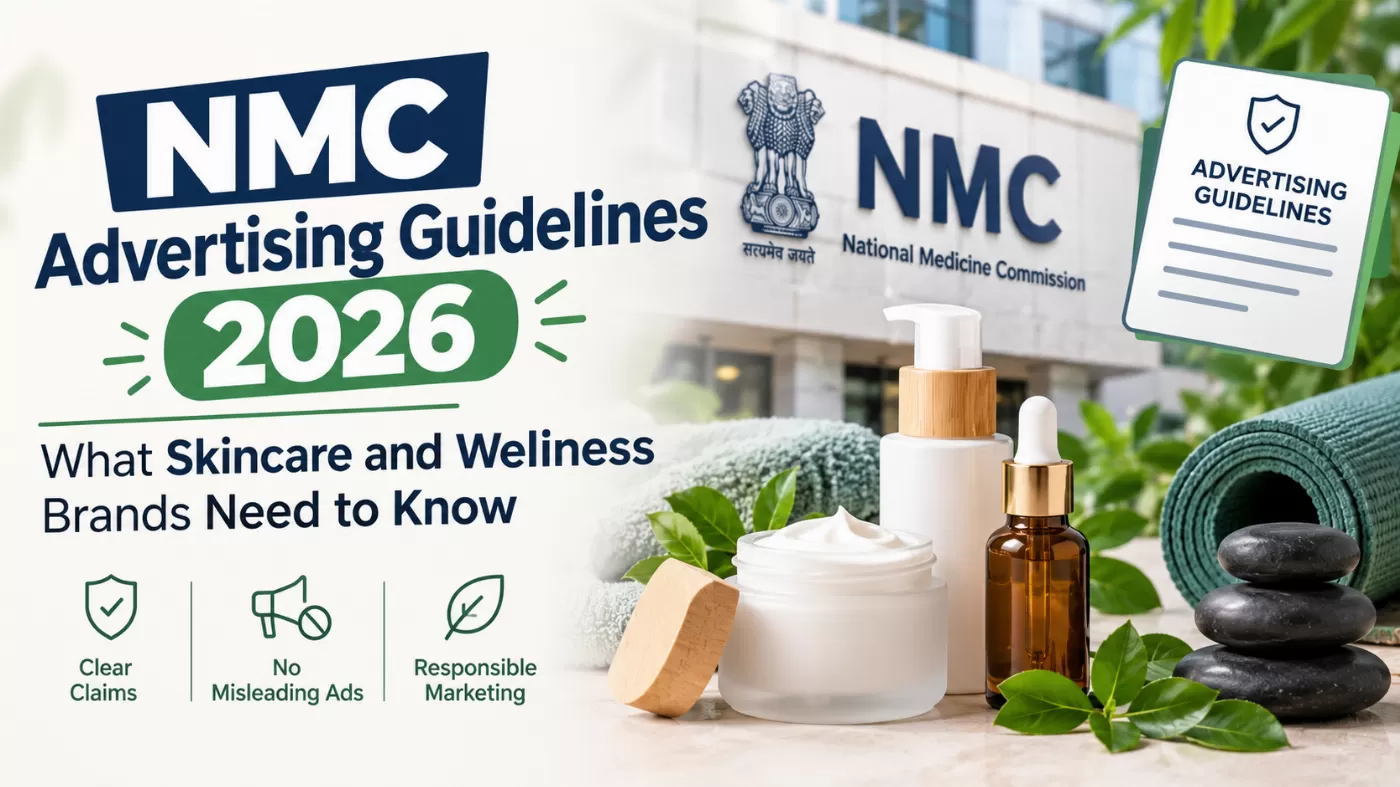
The way healthcare and wellness businesses communicate with customers is changing. On October 6, 2026, the National Medical Commission (NMC) issued its Guidelines on Ethical Advertising and Public Communication by Hospitals/Medical Institutions and Registered Medical Practitioners. These guidelines address misleading promotional claims, endorsements, patient testimonials, manipulated reviews, and other advertising practices involving medical professionals and healthcare institutions. For skincare brands, wellness companies, dermatology clinics, healthcare providers, and digital marketing agencies, this is an important reminder to review advertising claims, promotional videos, website content, and influencer campaigns. However, it is essential to understand that the NMC guidelines do not automatically impose every restriction on every independent skincare or wellness product brand. The rules that apply depend on the business, the advertiser, the product or service, and the nature of the promotion. Other Indian advertising and consumer protection laws may also apply.
Advertising Practices Healthcare and Wellness Marketers Should Review
1. Doctor Endorsements and Medical Recommendations
Claims such as “Doctor Recommended,” “Dermatologist Approved,” or “Clinically Proven” can influence consumer decisions, particularly when promoting skincare products, supplements, or wellness services.
Healthcare advertising must be reviewed carefully to determine whether a doctor is endorsing a product or promoting a medical service in a way that violates applicable professional rules.
Recommended approach: Use accurate, verifiable information about ingredients, testing, qualifications, and product characteristics. Do not imply a medical endorsement without appropriate evidence and regulatory review.
2. Guaranteed Results and Unsupported Claims
Statements such as “100% Guaranteed Results,” “Guaranteed Cure,” “Permanent Results,” or “No. 1 Brand” may create unrealistic expectations when they are misleading, unsubstantiated, or prohibited under the applicable rules.
The risk is especially significant when advertising products or services associated with medical conditions, skin treatments, or health outcomes.
Recommended approach: Replace exaggerated promises with clear, evidence-based product information.
For example:
Instead of “Guaranteed Acne Cure,” explain the product's intended use and relevant supporting evidence.
Instead of “Instant Permanent Results,” describe what users can reasonably expect, where supported by evidence.
Instead of “India's No. 1 Skincare Brand,” use independently verifiable facts rather than unsupported superiority claims.
A disclaimer does not automatically make a misleading headline acceptable.
3. Fake Reviews, Paid Ratings, and Manipulated Testimonials
Customer feedback can help people evaluate a business, but fabricated reviews and manipulated ratings undermine trust.
Healthcare professionals and institutions must pay particular attention to the NMC's restrictions concerning fake or manipulated reviews and promotional testimonials.
Recommended approach: Build credibility through transparent product information, genuine customer service, accurate business information, and feedback practices that comply with the applicable rules.
Never purchase fake reviews or manufacture testimonials. Also, do not assume that a genuine review can automatically be republished as promotional content for a regulated medical practice.
4. Patient Testimonials and Before-and-After Images
Before-and-after photographs, patient success stories, and testimonial videos are frequently used to promote dermatology clinics, cosmetic procedures, and wellness services.
However, the new NMC guidelines introduce important restrictions on promotional patient testimonials and related medical advertising practices.
Consent alone should not be assumed to make every promotional use permissible.
Recommended approach: Review the applicable professional rules before publishing patient stories, treatment outcomes, or clinical photographs. Consider educational illustrations, general explanations of procedures, and factual information that do not rely on promotional patient claims.
For independent skincare products, check the relevant product advertising and consumer protection requirements separately.
5. Discounts, Cashback, and Promotional Offers
Discounts, cashback, free consultations, and limited-period offers are common digital marketing techniques. Their permissibility depends on the context and applicable regulations.
Under the NMC guidelines, promotional inducements that encourage unnecessary medical consultations, investigations, or treatments raise particular concerns.
This does not mean that every commercial discount offered by every skincare or wellness retailer is automatically prohibited by the NMC.
Recommended approach: Evaluate the offer, the advertised service, and the applicable legal requirements before launching a campaign. Avoid pressure tactics that exploit health concerns or encourage unnecessary treatment.
6. AI-Generated Doctors, Avatars, and Testimonials
Artificial intelligence is increasingly used to create product videos, virtual presenters, advertising scripts, and social media content.
AI can be useful for educational communication, but it should not be used to create deceptive endorsements, fabricated patient experiences, misleading medical claims, or representations that violate applicable professional rules.
Recommended approach: Use AI to help explain ingredients, organise educational information, and develop responsible creative concepts. Review all generated content for factual accuracy, misleading representations, and relevant disclosure requirements.
Remember that using an AI avatar does not remove responsibility for the claims made in an advertisement.
What Should Skincare and Wellness Brands Do Now?
Businesses should use this opportunity to conduct a structured advertising compliance review.
1. Audit existing advertising campaigns. Review Meta Ads, Google Ads, Instagram Reels, YouTube videos, influencer content, and landing pages for unsupported claims and potentially restricted promotional practices.
2. Review website content. Check product descriptions, service pages, testimonials, promotional banners, FAQs, and claims about results.
3. Create evidence-based content. Explain ingredients, product functions, intended use, available evidence, and limitations without promising outcomes that cannot be substantiated.
4. Review influencer partnerships. Ensure that endorsements, sponsored content, and medical claims comply with the requirements applicable to the product, service, and person promoting it.
5. Establish an approval process. Have qualified reviewers assess high-risk claims before publication, particularly when campaigns involve doctors, clinical treatments, health conditions, or medical outcomes.
6. Check platform policies separately. Meta and Google have their own advertising policies. Compliance with one platform's policies does not automatically establish compliance with Indian law or professional regulations.
Educational Marketing: A Sustainable Strategy for Health and Beauty Brands
Responsible marketing does not mean that brands must stop communicating with their audiences.
Instead, businesses can focus on providing useful, accurate information that helps consumers make informed decisions.
Examples include:
Ingredient education: Explain what common skincare ingredients do and what the available evidence supports.
Product education: Describe intended uses, directions, precautions, and limitations.
General wellness education: Share evidence-based information without promising guaranteed health outcomes.
Frequently asked questions: Answer common questions accurately and transparently.
Expert-led education: Where permitted, use appropriately qualified professionals to communicate factual information without prohibited endorsements or promotional claims.
This approach can support brand credibility, organic search visibility, audience engagement, and long-term customer trust.
How Digital Marketing Agencies Can Help
Digital marketing agencies working with healthcare, skincare, and wellness businesses should consider compliance at every stage of a campaign.
At CWP Digital, our approach to digital growth focuses on combining search engine optimisation, content strategy, website optimisation, and paid advertising with accurate messaging.
A responsible marketing workflow should include:
SEO content audits and keyword research.
Review of advertising claims and landing-page copy.
Educational content planning for websites and social media.
Evidence checks for product and health-related claims.
Separate reviews of applicable legal requirements and advertising platform policies.
Ongoing campaign monitoring and content updates.
No marketing agency can guarantee that an advertisement will never be rejected or that a business will never face regulatory action. The goal should be to reduce avoidable risks while building a transparent and sustainable marketing strategy.