Blog / Search Engine Optimization
Google November 2026 Core Update: 5 SEO Mistakes to Avoid
By CWP Digital · 19 Nov 2026
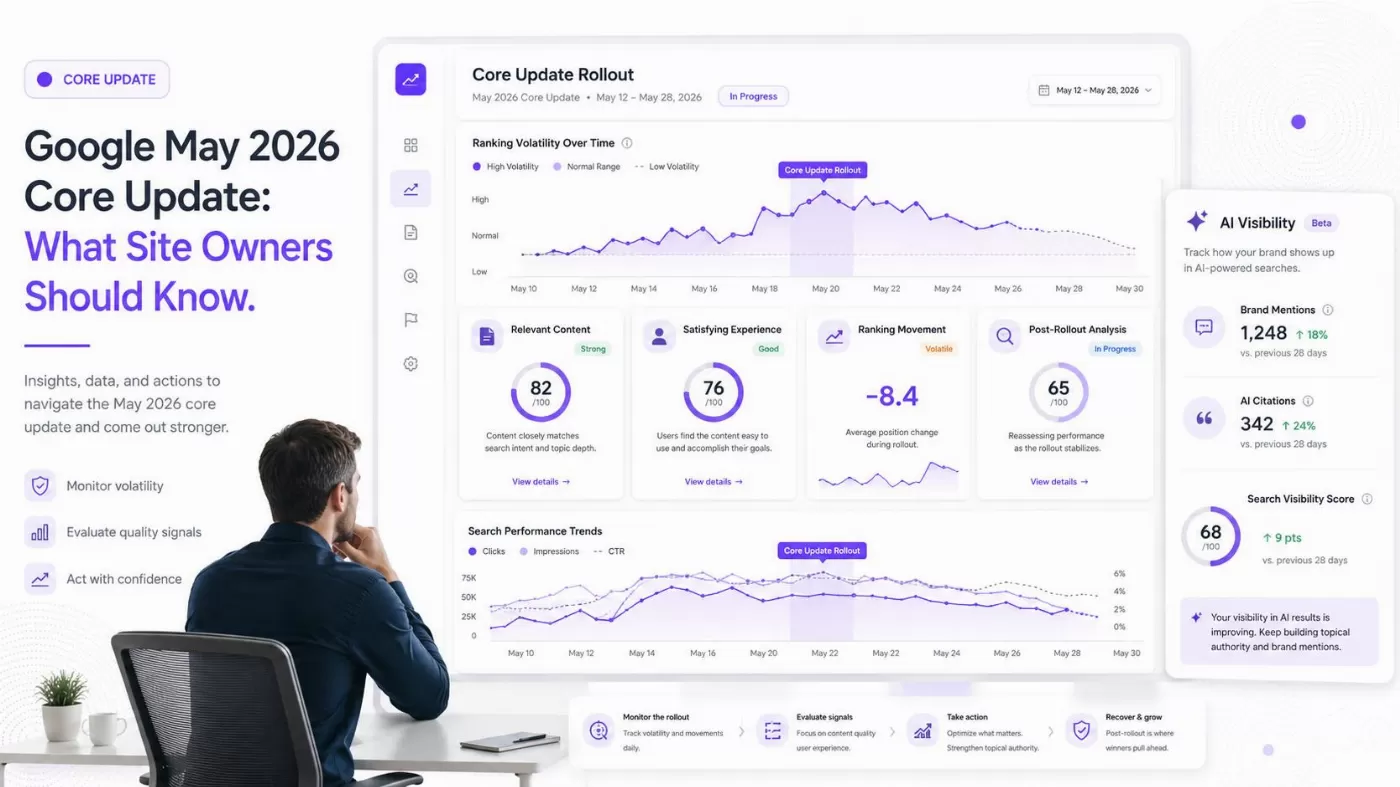
Google has officially started rolling out its November 2026 Core Update on November 10, 2026. This is Google’s third major core update of the year, and it is designed to improve search results by prioritising relevant, useful, and satisfying content for users.
The update applies globally across all languages, and Google has indicated that the rollout may take up to two weeks to complete.For website owners, SEO professionals, and digital marketers, this update is an important reminder that ranking on Google is not just about targeting keywords. Websites must provide genuine value, relevant information, and a positive user experience.At CWP Digital, we believe businesses should focus on sustainable SEO strategies instead of shortcuts that may negatively affect their organic visibility.Let’s explore five SEO practices that website owners should review following Google’s November 2026 Core Update.
1. Mass Content Publishing Without Adding Real Value
Publishing multiple pages does not necessarily improve your website’s SEO performance.
Many businesses create hundreds of location-specific landing pages to target different cities, neighbourhoods, and service areas. However, these pages often contain almost identical information, with only the location name changed.
For example, a digital marketing agency might publish separate pages targeting:
- SEO Services in Gurgaon
- SEO Services in Delhi
- SEO Services in Noida
- SEO Services in Faridabad
Creating these pages is not inherently wrong. The problem arises when they offer no meaningful differences or additional value to visitors.
Google’s scaled content abuse policy addresses the practice of producing large amounts of unoriginal content primarily to manipulate search rankings, regardless of whether it is created using AI, automation, or human writers.
How to improve your website:
- Create location pages with genuinely useful local information.
- Include relevant services, local case studies, and customer experiences.
- Avoid publishing duplicate or near-identical pages.
- Consolidate pages that serve the same purpose.
- Focus on user value rather than the number of published URLs.
2. Using Generic Website Templates Without Differentiation
AI website builders and ready-made templates have made website development easier than ever.
However, many businesses still launch websites using generic layouts, repetitive content, and almost identical service pages.
A template-based website is not automatically harmful to SEO. Google does not penalise websites simply because they use the same WordPress theme or website design.
The actual concern is a lack of originality, meaningful information, and differentiation.
If multiple businesses offer similar services using identical website content and generic messaging, they may struggle to establish a distinctive online presence.
How to improve your website:
- Develop original website content.
- Showcase your business’s unique selling propositions.
- Add authentic customer testimonials and case studies.
- Use original images and relevant business information.
- Improve website navigation and user experience.
- Make your service pages genuinely helpful.
Remember, your website should communicate why customers should choose your business over competitors.
3. Poor Search Intent Optimisation
Search intent is one of the most important elements of a successful SEO strategy.
When someone searches for a particular keyword, they expect to find information that directly answers their query.
For example, consider the keyword “Fruit Calorie Calculator”.
A user searching for this term probably wants an interactive tool that calculates the calorie content of different fruits.
If your page contains several lengthy paragraphs about fruit nutrition but does not provide an actual calculator, it may fail to satisfy the user’s expectations.
Similarly:
- Someone searching for “Best SEO Agency in Delhi” wants to compare SEO agencies.
- Someone searching for “SEO Services Pricing” wants pricing information.
- Someone searching for “How to Improve Website Rankings” wants practical SEO guidance.
How to improve your website:
- Understand the search intent behind every target keyword.
- Analyse the type of content ranking on Google’s first page.
- Provide direct answers to users’ questions.
- Use relevant headings and easy-to-understand explanations.
- Add calculators, comparison tables, images, or other useful features where appropriate.
- Avoid unnecessary content that distracts users from their primary objective.
The goal is simple: give visitors what they are actually looking for.
4. Publishing Irrelevant Off-Topic Content
Building topical authority is an important part of a long-term SEO strategy.
However, publishing unrelated content just to attract additional organic traffic can create problems.
Imagine a plumbing services website regularly publishing articles about cryptocurrency investments, stock market predictions, and digital banking.
Although these topics might generate traffic, they have little connection with the website’s primary business.
This does not automatically result in a Google penalty. However, publishing large amounts of irrelevant content can weaken the website’s topical focus and provide little value to its intended audience.
How to improve your website:
- Focus on topics directly related to your products and services.
- Create relevant supporting blog articles.
- Build meaningful internal links between related pages.
- Publish educational content that answers customer questions.
- Avoid chasing unrelated trending keywords simply for traffic.
For example, a plumbing business can publish articles about plumbing maintenance, bathroom renovations, water leakage solutions, and pipe installation.
These topics are much more relevant to its audience.
5. Over-Reliance on Exact Match Domains (EMDs)
An Exact Match Domain (EMD) is a domain name that closely matches a particular search keyword.
For example:
- bestseoservicesindelhi.com
- bestplumberingurgaon.com
- cheapwebsitedevelopmentservices.com
Some businesses purchase keyword-rich domain names believing that an exact keyword match will automatically improve their Google rankings.
However, a domain name alone cannot guarantee search visibility.
Google’s systems evaluate several factors, including content relevance, website quality, reputation, and overall usefulness.
A website with an exact match domain can perform well when it provides genuine value, authentic customer experiences, and useful information.
The problem is relying on keyword-heavy domains as a shortcut while neglecting the actual quality of the website.
How to improve your website:
- Choose a domain that represents your brand.
- Develop a recognisable business identity.
- Build genuine customer reviews and testimonials.
- Earn relevant brand mentions and quality backlinks.
- Publish original and useful content.
- Focus on building long-term brand credibility.
A strong brand is a much more sustainable SEO asset than a keyword-rich domain alone.
What Should Website Owners Do After Google’s November 2026 Core Update?
The most important thing is not to panic or make unnecessary website changes during the rollout.
Google’s November 2026 Core Update may take up to two weeks to complete. Website owners should monitor their organic performance and wait until the rollout is finished before drawing conclusions about ranking changes.
Here are some practical steps to follow:
- Monitor Google Search Console
Track clicks, impressions, average positions, and keyword performance.
- Identify Underperforming Pages
Find pages experiencing significant declines in organic visibility and investigate possible reasons.
- Review Content Quality
Check whether your website provides original, relevant, and useful information.
- Improve Search Intent
Ensure that every important landing page satisfies the actual requirements of its target audience.
- Strengthen Topical Relevance
Publish content related to your core products, services, and industry expertise.
- Build Genuine Brand Authority
Focus on authentic reviews, customer experiences, relevant mentions, and trustworthy references.
- Avoid Unnecessary SEO Changes
Do not delete pages, rewrite your entire website, or change your URL structure simply because rankings fluctuate during an update.
Google recommends assessing performance after a core update has completed and allowing sufficient time for meaningful comparisons.
Does Google’s November 2026 Core Update Penalise AI-Generated Content?
No. AI-generated content is not automatically against Google’s policies.
Google’s primary concern is the quality and purpose of content, not simply the technology used to create it.
AI can be a useful tool for research, content planning, and writing assistance. However, publishing large volumes of low-quality, repetitive, or unoriginal content primarily to manipulate search rankings can violate Google’s scaled content abuse policy.
Businesses should use AI responsibly while ensuring that published content offers genuine expertise, accuracy, originality, and value to readers.
Final Thoughts: Prepare Your Website for Google’s Latest Algorithm Update
Google’s November 2026 Core Update reinforces an important SEO principle: websites should be created for people, not just search engine algorithms.
Mass content publishing, duplicate location pages, poor search intent optimisation, irrelevant topics, and over-reliance on exact match domains are practices worth reviewing.
However, none of these practices automatically guarantees a Google penalty. The actual impact depends on the website’s overall quality, implementation, and compliance with Google’s policies.
At CWP Digital, we help businesses build sustainable online visibility through strategic SEO, technical optimisation, content marketing, and local SEO services.
If your website has experienced a decline in Google rankings or you want to prepare for future algorithm updates, our team can help you identify SEO issues and develop a practical growth strategy.
Need professional SEO assistance? Contact CWP Digital today and take the next step towards stronger Google rankings and sustainable organic growth.